Select your language
Observe & Identify
- Details
- Category: Observe & Identify
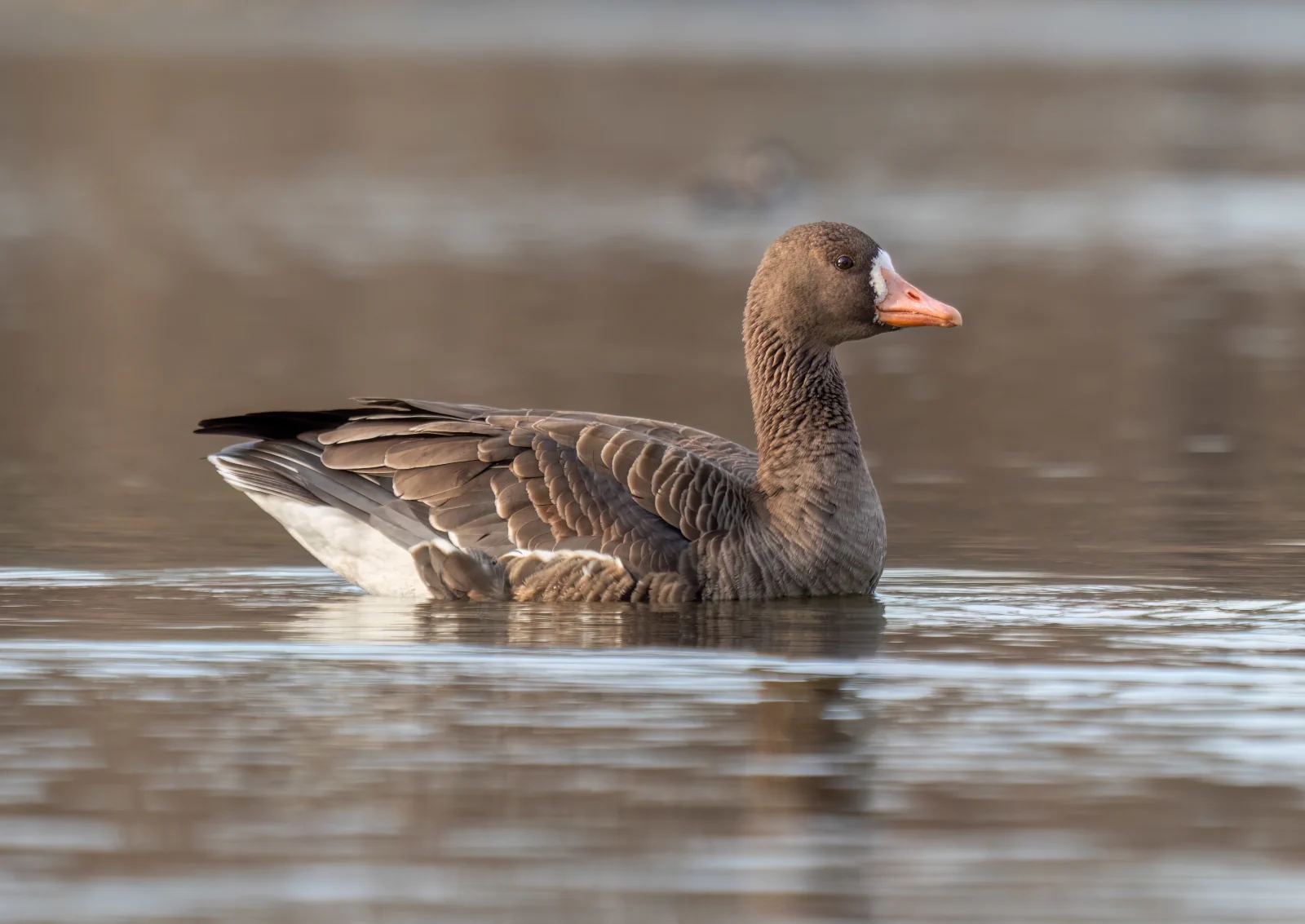
The Greater White-fronted Goose is the great migratory goose that, every winter, leaves the Arctic tundra to spend the cold season on the cereal plains of Europe. Smaller and more elegant than the Greylag Goose, it wears a brown-grey plumage finely barred on the back, a white belly streaked with black bars (the characteristic "cloud markings" that distinguish each individual), and above all a white face framing the bill, which earned the species its English name of White-fronted Goose and its scientific name albifrons ("white front"). Its massive body is pointed and streamlined, its flight fast and direct, and its skeins cross the autumn sky in loose, noisy V-formations, with high-pitched nasal yapping that betrays the flocks long before they appear. It is encountered in winter in the great cultivated and wet plains of north-eastern France, from the humid Champagne region to Lorraine and Alsace, where ploughed fields and grasslands offer its cold-season resources. The Greater White-fronted Goose is a bird of long-distance travel, of agricultural gleaning and of noisy dawn flights, linking the Siberian tundra to the plains of western Europe every autumn.
- Details
- Category: Observe & Identify
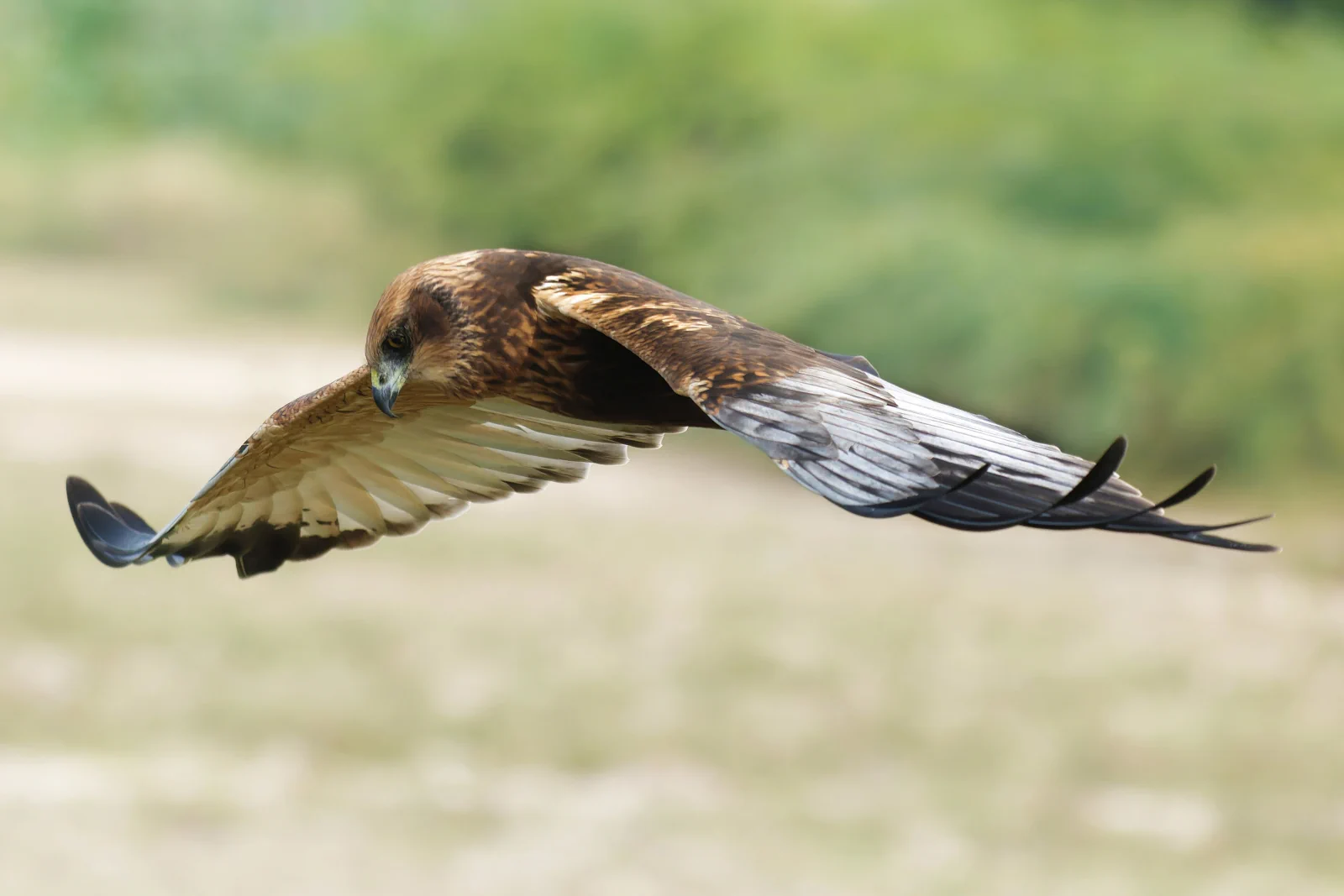
Voici les deux versions traduites avec leurs métadonnées SEO, Greg. Version Anglaise (English Version) Meta Title Western Marsh Harrier | Circus aeruginosus | Wetlands Raptor Guide Meta Description Discover the Western Marsh Harrier (Circus aeruginosus): habitat, identification, behaviour, diet, reproduction and conservation in European wetlands. A comprehensive ornithological guide. Keywords western marsh harrier, Circus aeruginosus, wetland raptor, marsh harrier identification, bird of prey Europe, rosy marsh harrier, Circus harrier, wetlands conservation, marsh birdwatching, ornithology guide, European raptors, reedbed habitats, bird migration Africa, harrier nesting habits, wetland biodiversity Content
The Western Marsh Harrier is undoubtedly the most emblematic of raptors associated with wetlands. With its slow, low flight, long wings carried in a V-shape, it soars over reedbeds and marshes with sovereign grace, scanning the vegetation for prey. The male, with its warm rufous body, grey wings bordered with black and silver-grey tail, contrasts vividly with the female, a large brown silhouette with a straw-coloured neck, perched among the reeds like a sentinel. But behind this beauty of raptor hides a patient, methodical hunter whose survival depends intimately on the preservation of palustrine environments.
- Details
- Category: Observe & Identify
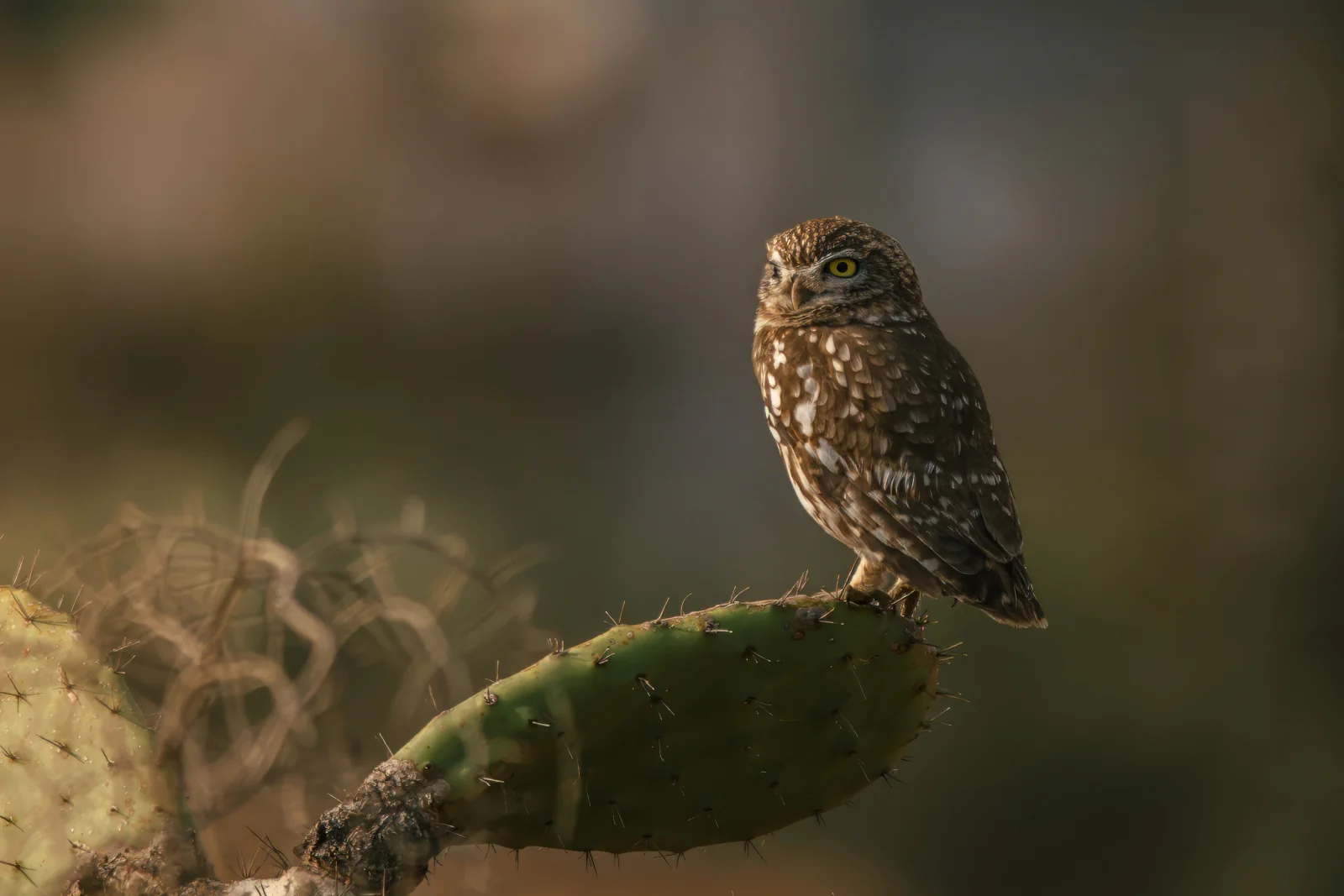
The Little Owl is the most diurnal and the most familiar of our owls. With its stocky little silhouette and upright posture, it readily perches in broad daylight at the top of a fence post, an electricity pole or a dead branch, scanning the ground with its large yellow eyes beneath white eyebrows that give it a permanently astonished expression. With its flattened, broad head, its brown back speckled with white, its white belly streaked with brown, and the false eyes on the back of its head (two pale patches that fool predators), it resembles no other European nocturnal raptor. It is found in hedged farmland, orchards, grazed meadows, villages with old timber-framed buildings and open wasteland — wherever short grass, cavities and perches abound. The Little Owl is a bird of ancient agricultural landscapes, of low hedges and old hollow trees, one that has followed people into the countryside for millennia (the Greeks already regarded it as the companion of Athena, goddess of wisdom).
- Details
- Category: Observe & Identify
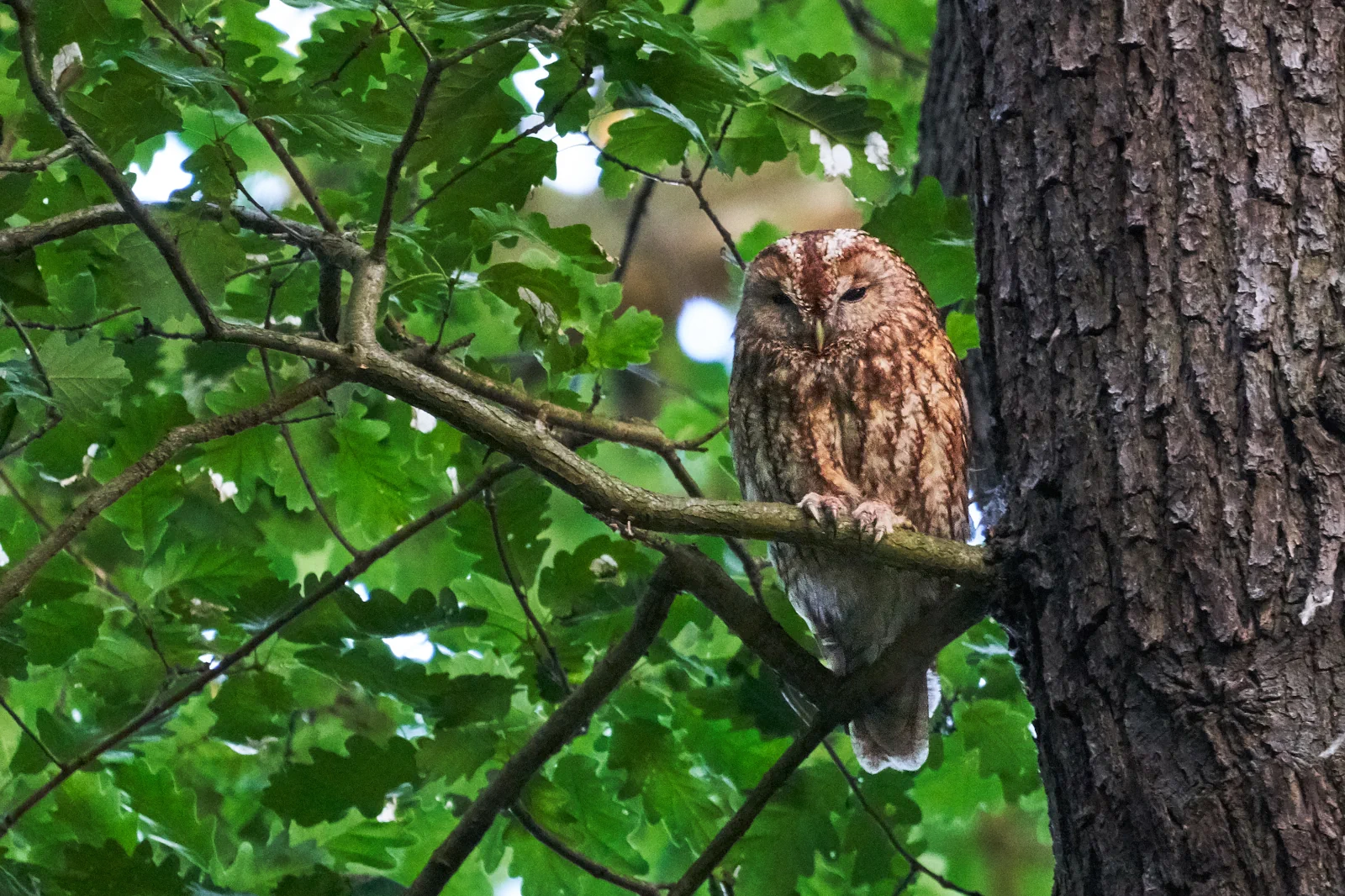
The Tawny Owl is the best known and the quietest of our forest owls. With its round head lacking ear tufts, its large black eyes set facing forward, its pale grey facial disc and its finely mottled brown or grey plumage, it blends perfectly into bark and branches. It is called "tawny owl" in reference to its characteristic call, that melancholy "hoo-hoo" which carries far through the still night and has echoed through centuries of folklore. It is found in deciduous and mixed woodlands, old parks, orchards and villages with age-old buildings, wherever hollow old trees and dense vegetation remain. The Tawny Owl is a bird of silence and of the forest, one that has lived alongside man without ever truly submitting to him.
- Details
- Category: Observe & Identify
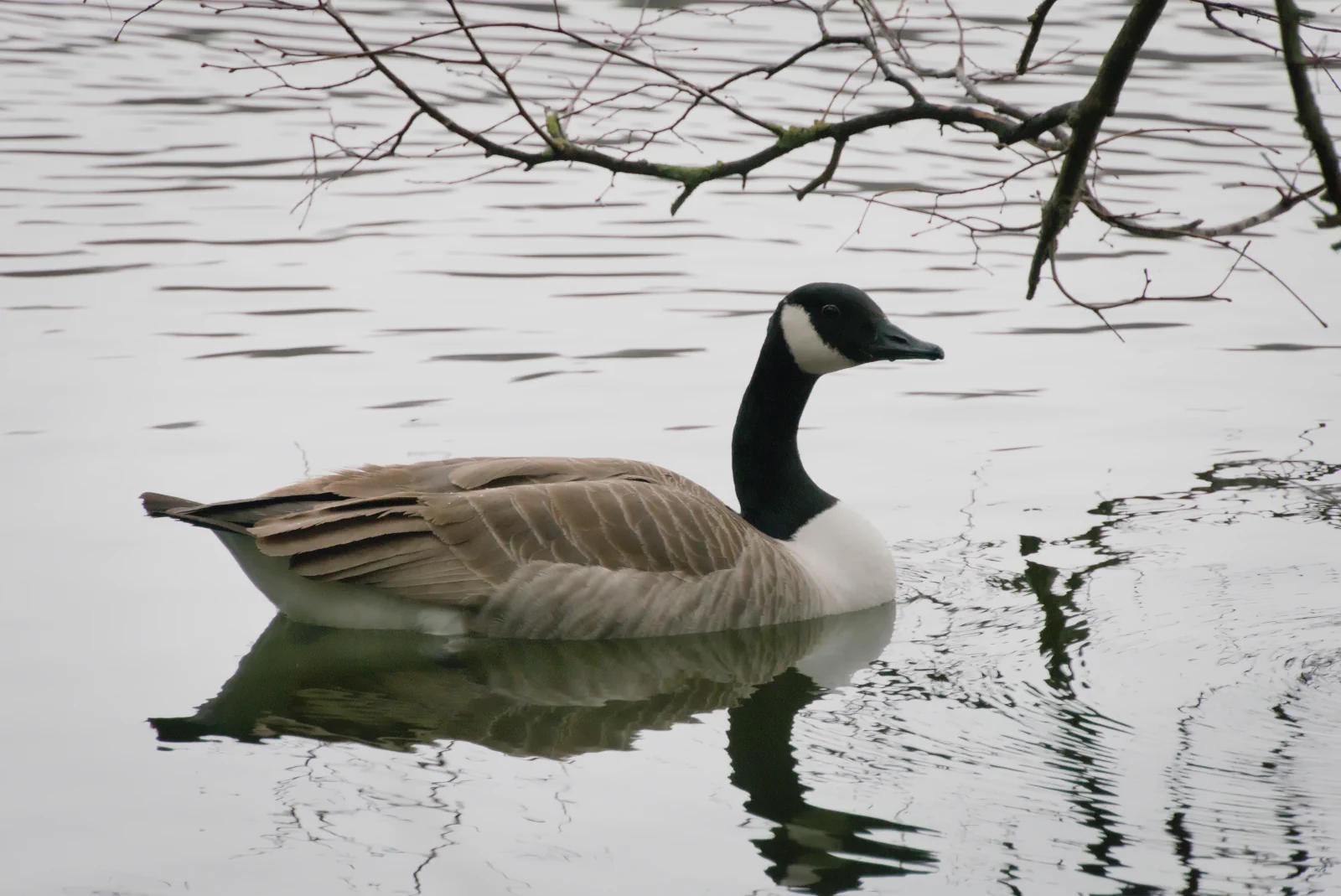
The Canada Goose is the largest of the anatids commonly encountered on French bodies of water. With its long black neck held high, the great white bandana-shaped patch beneath its chin, its sturdy brown body and massive silhouette, it resembles no other bird in Europe. Native to the North American continent, it was introduced to Western Europe for ornamental and hunting purposes (as early as the 17th century in England, then on a massive scale in the 20th century), before becoming permanently established in the wild. Today it can be found on ponds, lakes, slow-moving rivers, reservoirs, urban water bodies and ornamental basins, often in familiar, noisy flocks. The Canada Goose is a bird of open water and mown lawns, trusting of humans, which has found in our parks and agricultural plains a paradise without predators.
More Articles …
Topics

Recent comments
-
When the Night Becomes Night Again
10 months agoI really enjoyed this piece—especially the way it makes light pollution feel concrete, not abstract.

(Call at no extra charge)
We are here to help
Monday to Friday, from 9 a.m. to 7 p.m.