Select your language
Observe & Identify
- Details
- Category: Observe & Identify
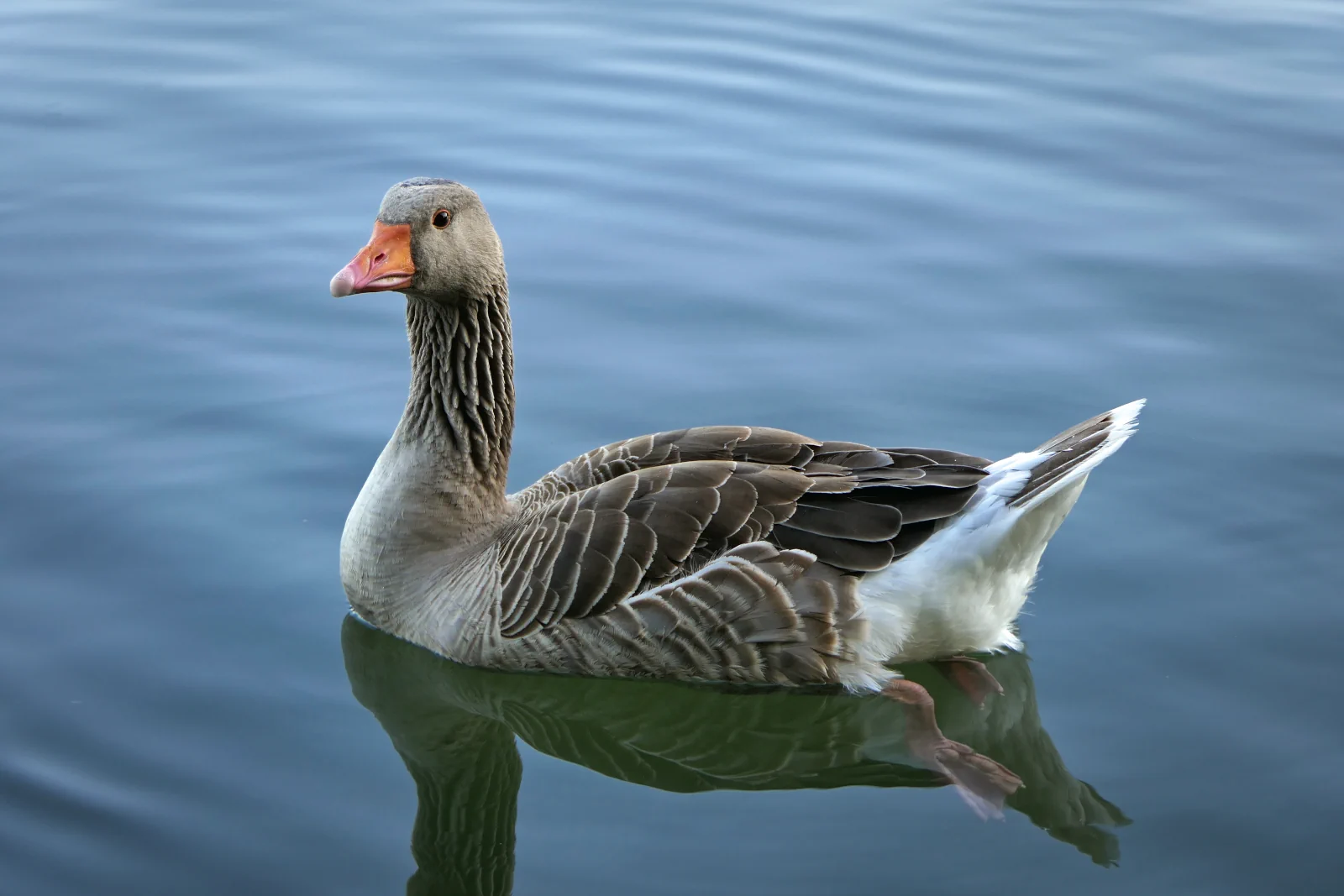
The Greylag Goose is the largest and most massive of our wild European geese. With its stocky body, its long robust neck, its thick pink-orange bill and its flesh-pink legs, it wears a discreet yet majestic livery: grey-brown plumage waved with white on the back, a white belly, a grey head and a black tail edged with white. In flight, its massive silhouette, broad wings and outstretched neck make it unmistakable, and its flight in V-formations or oblique lines, accompanied by powerful calls, is one of the most emblematic spectacles of the autumn migration. It is found in marshes, ponds, wet meadows, estuaries and great lakes, wherever shallow water, salt meadows and short grassland offer food and tranquillity. The Greylag Goose is a bird of open space, of the wide horizon and low light, that fears neither cold nor wind, and that shares with the swans the art of formation flight and lasting pair bonds.
- Details
- Category: Observe & Identify
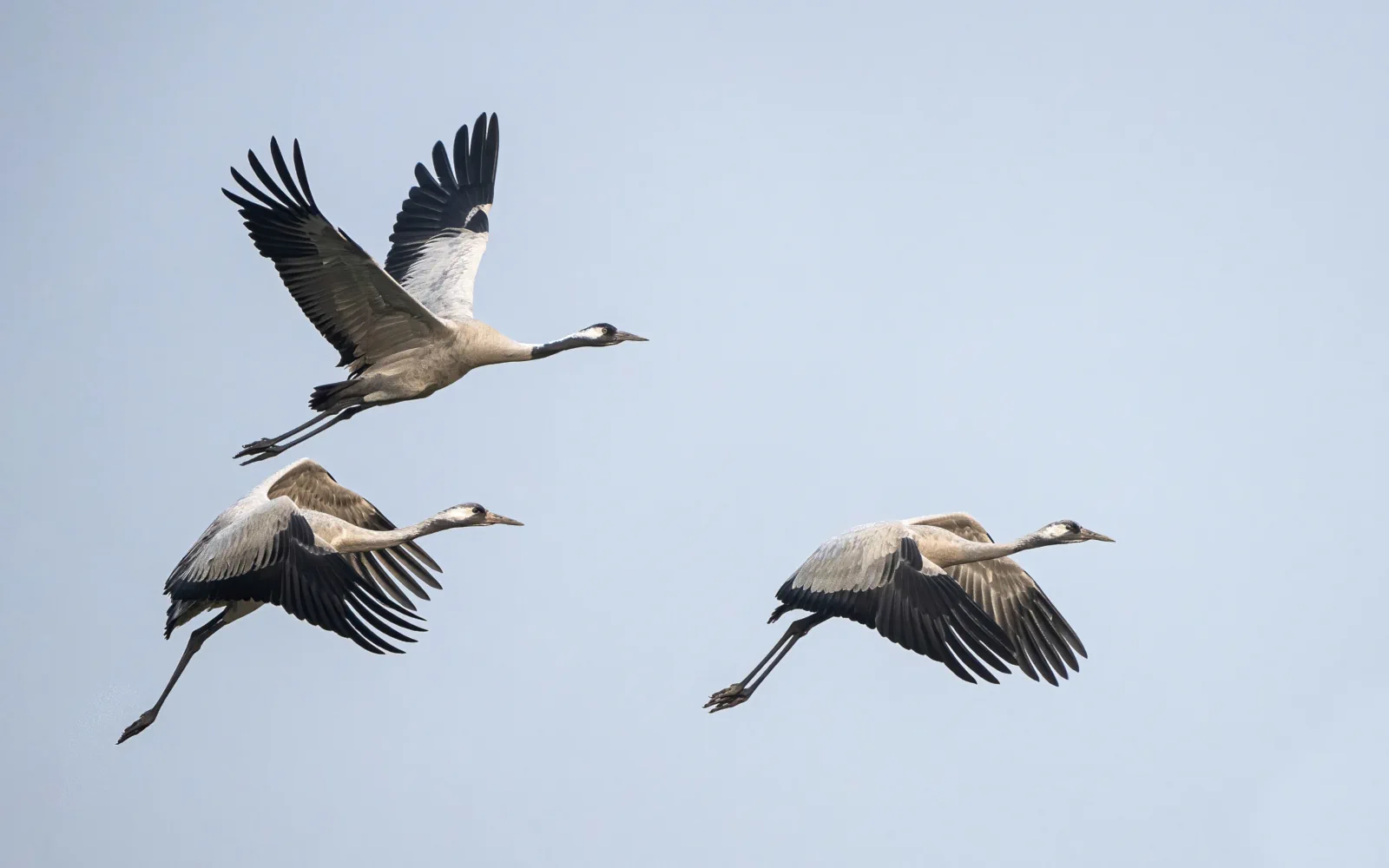
The Common Crane is one of the most majestic and evocative birds in all of Europe's fauna. With its two-metre wingspan, its long outstretched neck, its long legs trailing behind the tail and its ash-grey plumage crowned with a scarlet-red cap, it dominates the sky like a giant of open space. But what truly makes it unforgettable is its call: a powerful, resonant "krrou-krrou", audible several kilometres away, that accompanies the formations in flight and announces the passage of the cranes long before they come into view. When a flight of cranes crosses the autumn sky, one looks up long before seeing it: first the sound, a wild fanfare come down from the North, then the V-shaped silhouettes, high aloft, irresistible. It is found in the great wild wetlands (marshes, peat bogs, damp heaths) during the breeding season, and in the cereal plains and great lake roosts in winter. The Common Crane is a bird of the great journey, of autumn skies and the great gatherings of migration, linking the Nordic taiga to the Iberian plains by flying over France every season.
- Details
- Category: Observe & Identify
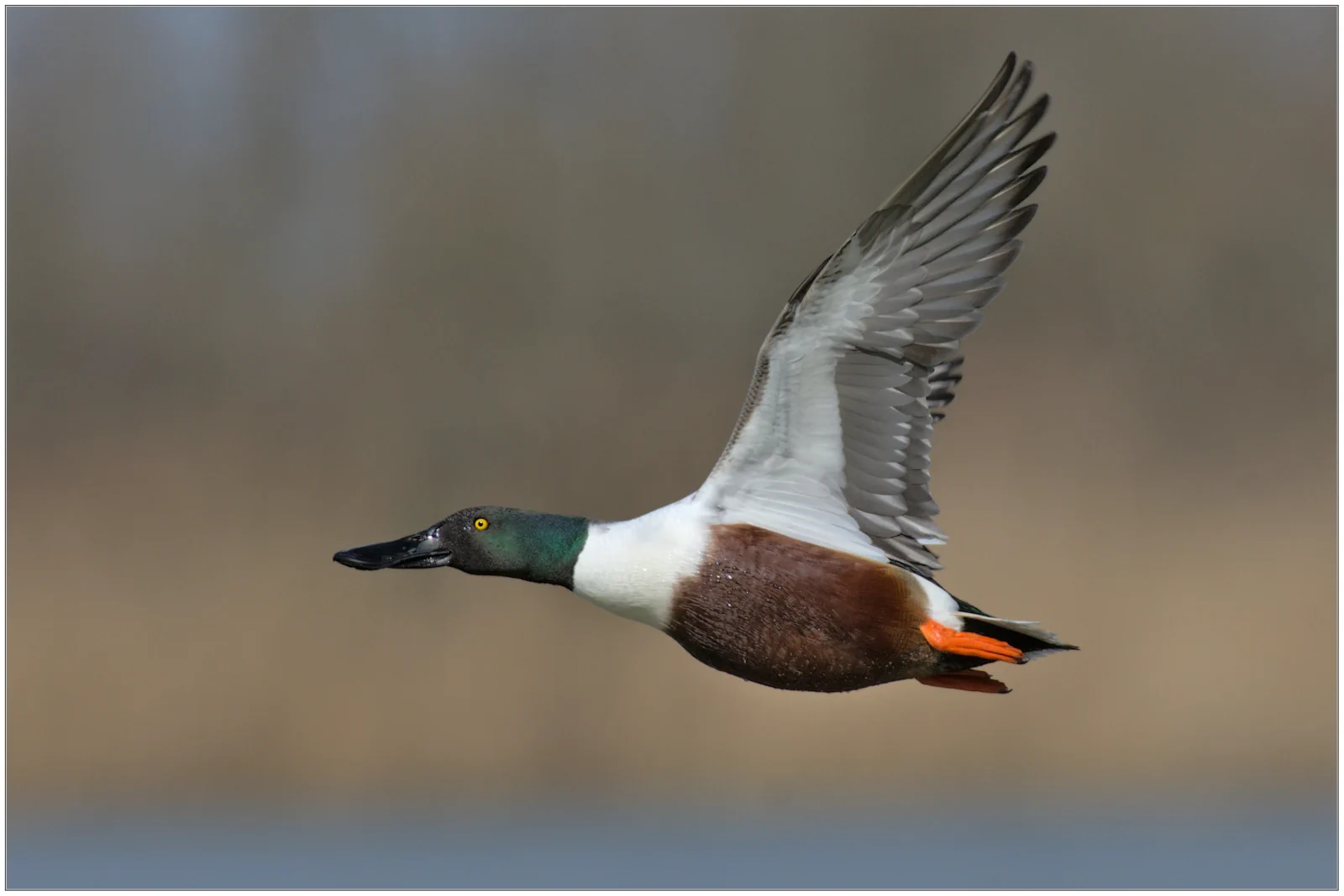
The Northern Shoveler is one of the most recognisable and most elegant ducks of our wetlands. With its broad, flat bill widening at the tip like a spoon or a spatula, it leaves no room for doubt: it is the only European duck equipped with such a peculiar tool. The male in breeding plumage is a natural poster: a glossy green head, an immaculate white breast, chestnut flanks, a black back and a black tail edged with white tips, all enhanced by a fine white collar separating the breast from the neck. The female, more discreet, wears the speckled brown mantle common to the females of many ducks, but her widened bill betrays her instantly. It is found in shallow freshwater, marshes, ponds, brackish lagoons, mudflats and floodplains, wherever its specialised bill allows it to filter water and sediments in search of micro-organisms. The Northern Shoveler is a bird of filtration and invertebrates, having traded vegetarian grazing for the sieving of muddy water.
- Details
- Category: Observe & Identify
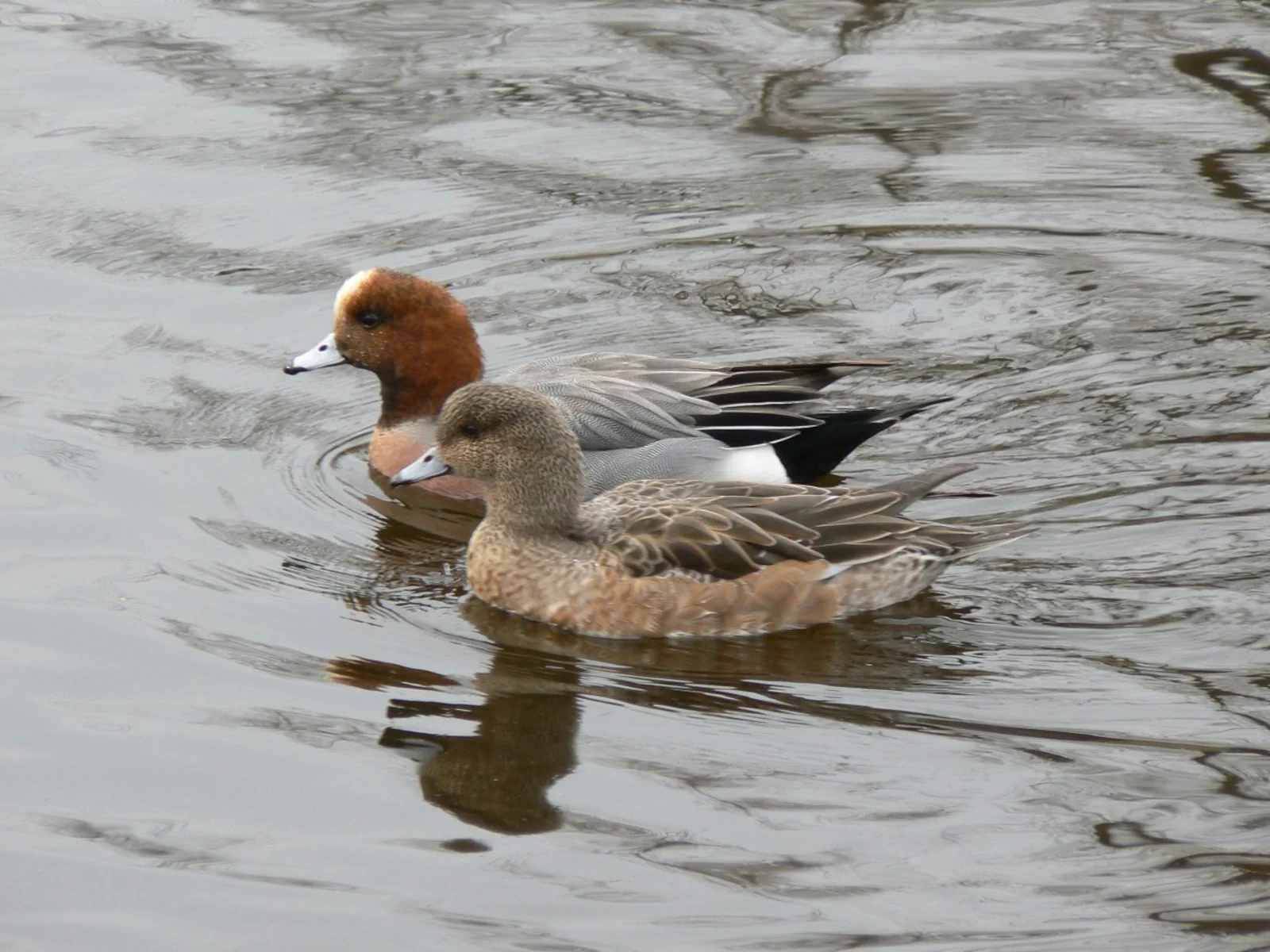
The Eurasian Wigeon is one of the most elegant and graceful ducks of our wetlands. With its pale rufous head, its yellow-orange forehead, its piercing grey-blue eyes and its finely vermiculated grey body, it evokes a streamlined, aerodynamic silhouette that glides across the water with remarkable ease. But what earned this species its French name is its call: a high, melodious, two-toned whistle, often described as a "pseeep" or "wi-wi", uttered in flight with a musical fluidity that carries far above the ponds. When a flock of wigeons crosses the autumn sky, their crystalline whistles are heard before their grey silhouettes can even be seen. It is found in shallow freshwater, marshes, ponds, lagoons, wet meadows and floodplains, wherever aquatic grassbeds abound. The Eurasian Wigeon is a bird of turf and grass, browsing tender vegetation and young shoots like a terrestrial herbivore, unlike most ducks which filter or sift the sediments.
- Details
- Category: Observe & Identify
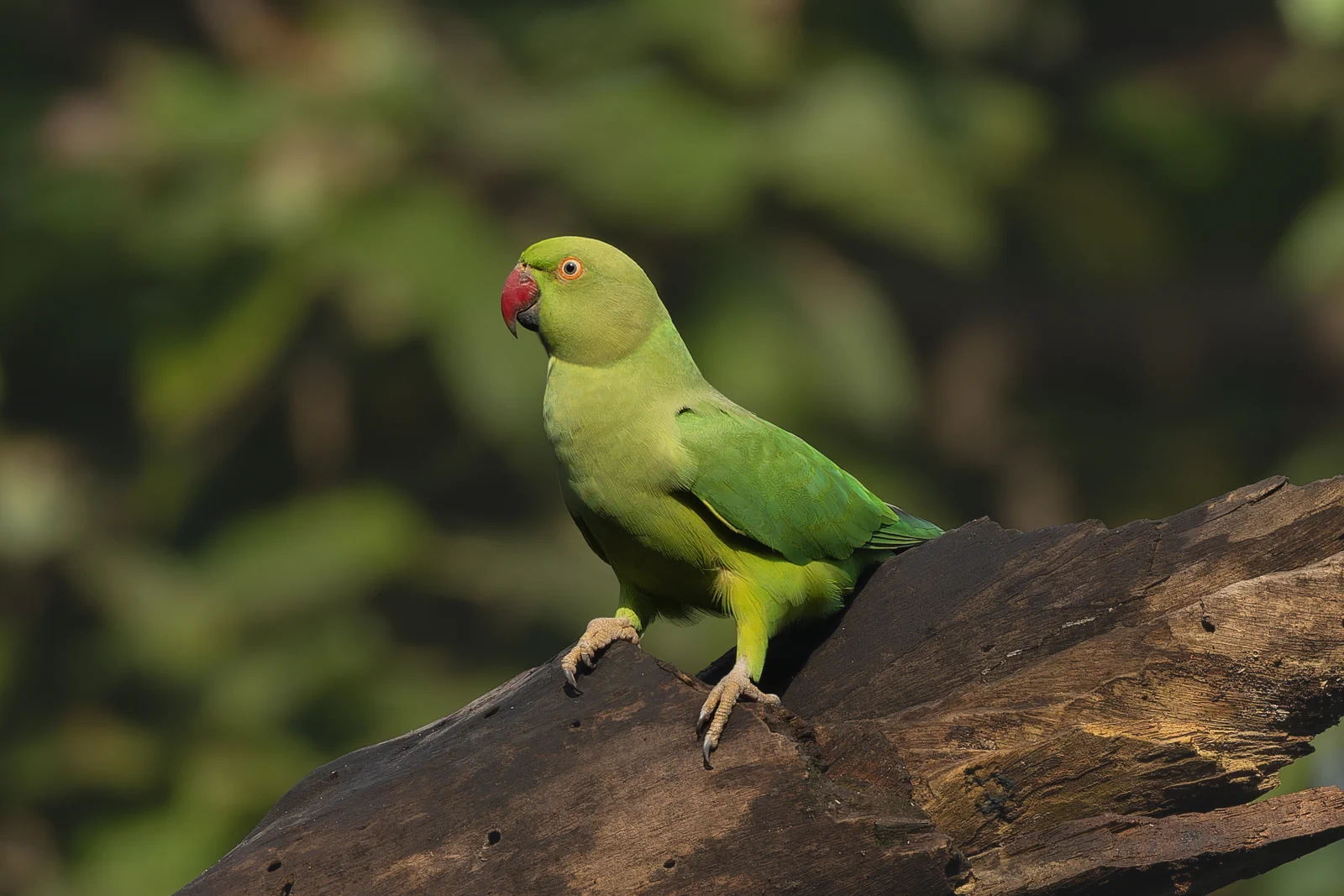
The Ring-necked Parakeet is one of the most remarkable, and most controversial, success stories among exotic-origin birds in Europe. Native to tropical regions of Africa and Asia, this slender, vividly coloured green parakeet (with its disproportionately long tail, red bill and black collar edged with pink in the male) has conquered our cities and parks within a few decades. Descended from escaped or released cage birds, it has become permanently established in major urban areas, where it nests in tree cavities and holes in building façades. It is found in parks, gardens, tree-lined streets, copses and urban riverside woods, wherever a mild climate and available cavities provide a roost and feeders, fruit and blossoms supply food. The Ring-necked Parakeet is a bird of leafy cities, of big hollow trees and noisy gatherings, one that has traded its tropical origins for life in temperate climates (and is doing remarkably well).
More Articles …
Topics

Recent comments
-
When the Night Becomes Night Again
10 months agoI really enjoyed this piece—especially the way it makes light pollution feel concrete, not abstract.

(Call at no extra charge)
We are here to help
Monday to Friday, from 9 a.m. to 7 p.m.